Years in Production
Portfolio Projects
Live Broadcasts
Production Roles Filled

My production journey began in high school. I transferred to a new school during my sophomore year and wanted to take one of my mom's classes to feel more comfortable. She ran our school newspaper where I started as a reporter. I didn't love traditional journalism writing so I started making video packages for our YouTube page. This evolved into a full broadcast program and transformed our newspaper into a multimedia news outlet.
During my junior year, I became the Editor-in-Chief of our broadcast program and helped develop our productions into a weekly production. My team would participate in the full production process including: pre-production, production, and post production. We created a full news broadcasts that were full of news reads, feature packages, and reaccuring segments.
I dedicate a lot of my success to my time in this program. I learned how to create without restrictions. It was common practice for our team to come up with a complicated idea and it was my job to make it happen. I remember late nights editing and figuring out software. I was never taught how to edit, I learned through self discovery and research. I think this gave me a deeper understanding of the softwares and I would now consider them an extention of my body.

When I started college, I was feeling burned out from journalism and wanted to explore a different side of media production. Rather than leaving journalism behind, I decided to double major in Film and Broadcast Journalism. This turned out to be one of the best decisions I have ever made. The relationship between live broadcasts and cinematic films is very close. My experience in both area enhances my overall preformance.
The most impactful experiences in college were my lecture classes. I entered college with years of hands-on production experience, but I had never taken the time to study why certain creative decisions work. By studying media history, I have created a video style that fits my personality. I think my work in film studies has helped me make journalistic videos more engaging.
I learned that every creative decision serves a purpose. Whether it is camera movement, composition, or editing, each choice can shape how an audience experiences a story. Combining film and journalism has allowed me to create content that is both informative and emotionally engaging. These lessons continue to influence my work today and help me build broadcasts that connect with viewers on a deeper level.

Classes are great, but nothing teaches you more than real-world experience. Before I even attended freshman orientation, I got a job working in IT on campus, where I created videos for professors. This role helped me develop muscle memory in video editing while introducing me to client-based production work. Although most of my projects focused on video, I also had opportunities to work with graphic design, motion graphics, and interactive learning modules. It was through this position that I learned to use Articulate 360 and further developed my skills in After Effects.
My second job was with PBS through its Student Reporting Labs program. My role was to teach high school students journalism and video production. While I had worked with students before through summer school programs, this experience was much more demanding. We had limited time in the classroom, so I had to make every lesson count. This challenged me to communicate production concepts clearly and adapt my teaching style to different groups of students. It was incredibly rewarding to watch the students develop their skills and discover the areas of production they were most passionate about.
After my time with PBS, I accepted a writing position with my university's School of Communications. At the time, I felt myself losing touch with my journalism roots, and this role gave me an opportunity to strengthen my reporting and writing skills. I need to remind myself that the best stories come from peoples experiences.
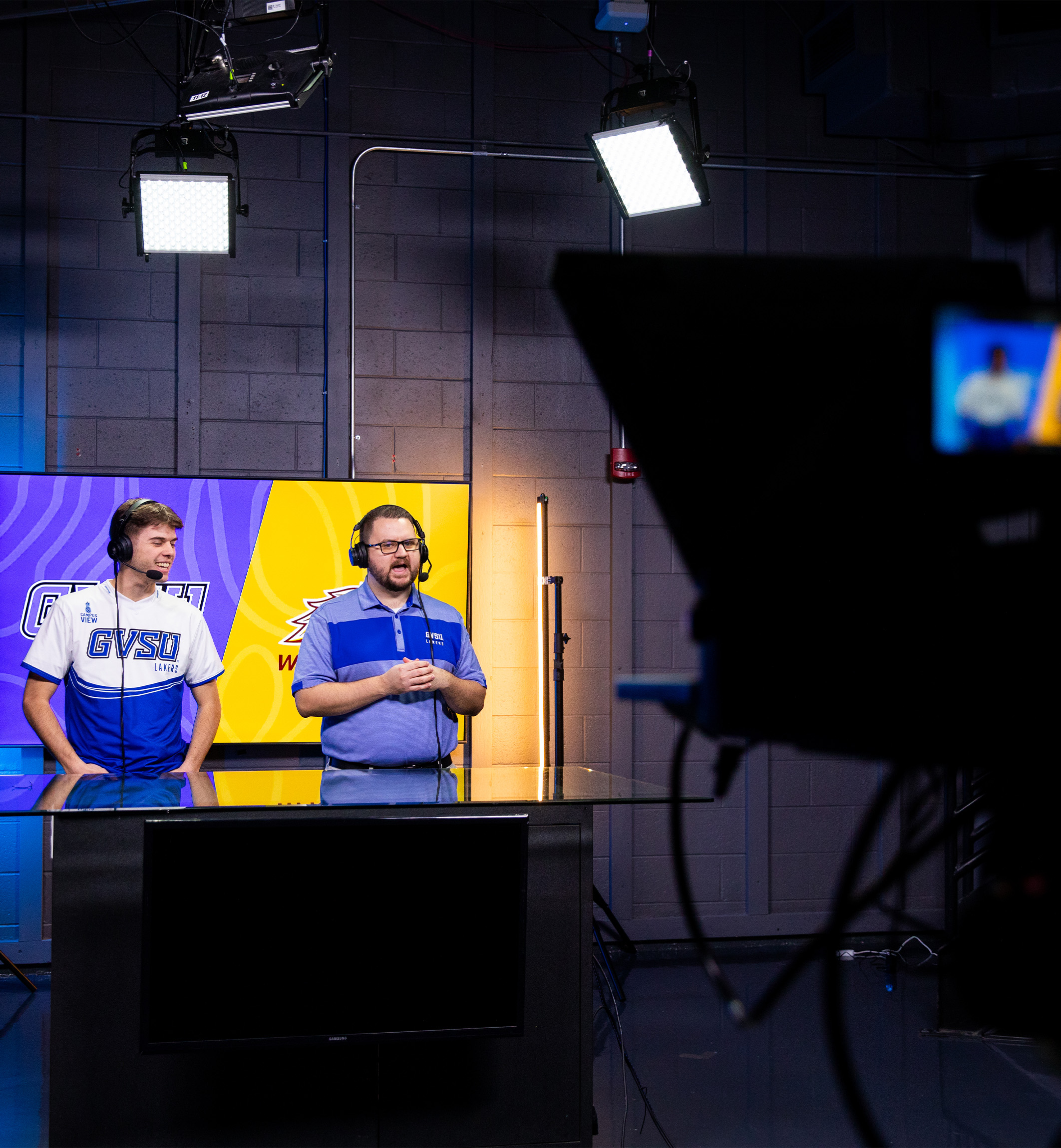
During my junior year of college, I discovered my passion for esports production. I took on the role of broadcast producer for our esports program as a way to build my live production skills. At the time, I never expected to fall in love with esports culture. It became a long-term passion and shaped my career direction.
About a year into the role, I stepped into a leadership position and helped expand the broadcast program significantly. We grew from producing occasional match streams to running a consistent weekly schedule that blended live and prerecorded content. Our goal was to connect the campus esports community and bridge the gap between different games and player groups.
Each week began with a long-form podcast-style show that highlighted members of the community and encouraged conversation around gaming. We also produced two live broadcasts featuring competitive matches against other colleges. These were full productions with casters, player interviews, graphics, and live match overlays. They gave players a more professional level of exposure while also giving our production team real, hands-on experience in live broadcasting.
We filled out the we with event highlight videosvof LAN events, inhouse competitions, or university engament. These videos helped bring attention to parts of the program that otherwise wouldn’t be seen and gave more visibility to the community behind the scenes.
I love how esports production naturally connects film and journalism. Video games focus on world building and story through visuals, like film, while esports is about capturing real moments as they happen. Esports production sits between those two approaches, translating a digital, fictional world into a real-time experience for an audience. That balance matches how I naturally approach production work and is what keeps me engaged in this field.
 OBS Studio
OBS is the main software I use for recording and streaming. I use the in software effects to create lightboard videos, stream overlays and b-roll. Also, OBS is the main output for my streams.
 vMix
vMix
vMix is the main switching software I use for live productions. I run a three camera set up with two PTZ player cameras. vMix makes connecting all of these sources very easy with integrated NDI functions. I also run the audio through the vMix audio bus system.
 Discord
Dicord is my main form of communication for production. I share production schedules, post match details, and cast talent through a production channel. I have also used the thread feature to keep track of active projects.
 Streamlabs
I mostly use Streamlabs as a plugin through OBS to add widgets. Streamlabs allows me to add chatboxes, alerts, and animated overlays.
 NDI
NDI
NDI is the best way to connect computers remotely. I would prefer to hardwire everything but that is not always an option. NDI allows me to stream game play from another compter with no lag. It helps that vMix has integrated NDI features.
 Pro Tools
I use Pro Tools for sound design. It is great for foley work with its loop recording function. I only use Pro Tools for cinematic projects as the software is very intense for smaller projects. However, the built in audio suite give me a lot of creative freedom.
 Final Draft
I use Final Draft 12 for film script writing. Most of my work revolves around journalistic script writing so I don't use it often. I prefer the two column (audio/visual) version of script writing for packages and anouncement videos. It is just easier for everyone to understand the full picture. For script writing, I think Final Draft has the best work flow and short cuts. I could get lost writing for hours in Final Draft.
 Premiere Pro
Premiere has been my editing software of choice since I started video editing. I have used premiere for over 8 years and I haven't run into anything it can't do. I have created motion graphics, podcasts, ads and more. If I can think it, premiere can do it. I use the whole adobe suite and I love the integration between all of the software. At this point, I consider premiere and extention of me.
 After Effects
I use After Effects for animated openers and transitions. I used to use Premiere Pro but After Effects is Stronger and can render keyframes better. After Effects is a very intense program but levels up my content if I put in the time.
 Photoshop
Photoshop is a crucial part of my workflow. I create custom graphics, thumbnails, and logos all in photoshop. I have used tools like Canva and Adobe Express but I always end up takingthe project into Photoshop to finish it. I like complete creative control and don't like software restrictions. I need a to be able to create anything I (or my client) can imagine. Photoshop is the way I do that.
 Audition
I use Audition to clean up audio and edit podcasts. Premiere has some great audio tools but sometimes I need to have control over audio frequencies to clean bad noise. I like that it is simpler than Pro Tools but still has most of the audio cleaning capabilities. I can also use Adobe Dynamic Link with Premiere for more efficient editing.
 InDesign
I use InDesign for page design. While newspapers are on their way out, page design is still relevant for ePapers and magazines. I do some of this work in Photoshop but Indesign can layout a paper and organize text. I love the planning capabilities with text and image boxes. It is gret for visualizing the final product.
 Dreamweaver
I coded this website using dreamweaver. Most HTML coders perfer other tools like Visual Studio but I like dreamweaver for several reasons. First of all,cI like the live reference view. I do't want to have to open my file somewhere else to see if I am coding right. Second, I love the server connection feature. I can push my website through the software. Finally, I am an Adobe Suite user and as someone who learned HTML to make my website, having a familiar interface was very helpful.
 Articulate 360
I use Articulate 360 to create interactive modules. I have used both Storyline 360 and Rise 360. I have used both of these in an eLearning enviroment for Universities. Professors find that interactive modules keep student engaged. I have also used them as a form of training in companies.